Inside the 10-Series: A Session-by-Session Map of What Structural Integration Actually Changes
Most bodywork is built around relief in the moment. You arrive carrying tension, you spend an hour on the table, and you leave feeling looser, lighter, and more at ease. It is a genuine gift, but it is also temporary. Within a few days the old patterns creep back, the shoulders climb toward the ears again, and the familiar ache in the lower back returns right on schedule.
Structural Integration takes a fundamentally different approach. Rather than chasing tension wherever it surfaces, it works methodically through the connective tissue, the fascia, of the entire body, reorganizing the way you are built so that better posture and easier movement become your new normal. At Gifts of Healing, this work is delivered the way it was originally designed, as a series of ten sessions, each one building on the last.
If you have ever wondered what actually happens across those ten sessions, and why the order matters so much, this is your map.

What Structural Integration Is (And Why It Comes in Tens)
Structural Integration is based on the work of Dr. Ida P. Rolf, who recognized that the body's fascial system, the continuous web of connective tissue that wraps every muscle, bone, and organ, holds the patterns we accumulate over a lifetime. Old injuries, repetitive movements, long hours at a desk, and the relentless pull of gravity all get written into the fascia. Over time, these patterns shorten, thicken, and lock us into postures that feel normal only because we have lived in them so long.
The work addresses this directly. Structural Integration works on the connective tissue, or fascia, of the body, with each session designed to balance the body and counter the effects of time and gravity. The goal is not to force the body into a position but to release the holding patterns so the body can learn new patterns of movement and heal itself.
This is also why it is delivered as a series rather than a single appointment. The profound effects of Structural Integration hinge on completing the full series of ten sessions, with each one progressing through the body and building on the work done before it. You cannot reorganize a deeply interconnected system in a single visit, and you cannot do it out of order. The ten-session arc is the method, not a marketing package.
Each session runs 90 to 120 minutes, giving the practitioner time to work slowly and deliberately through the fascia rather than rushing across the surface. It is intense bodywork that releases long-held patterns in the body, and that depth is part of why the results last.
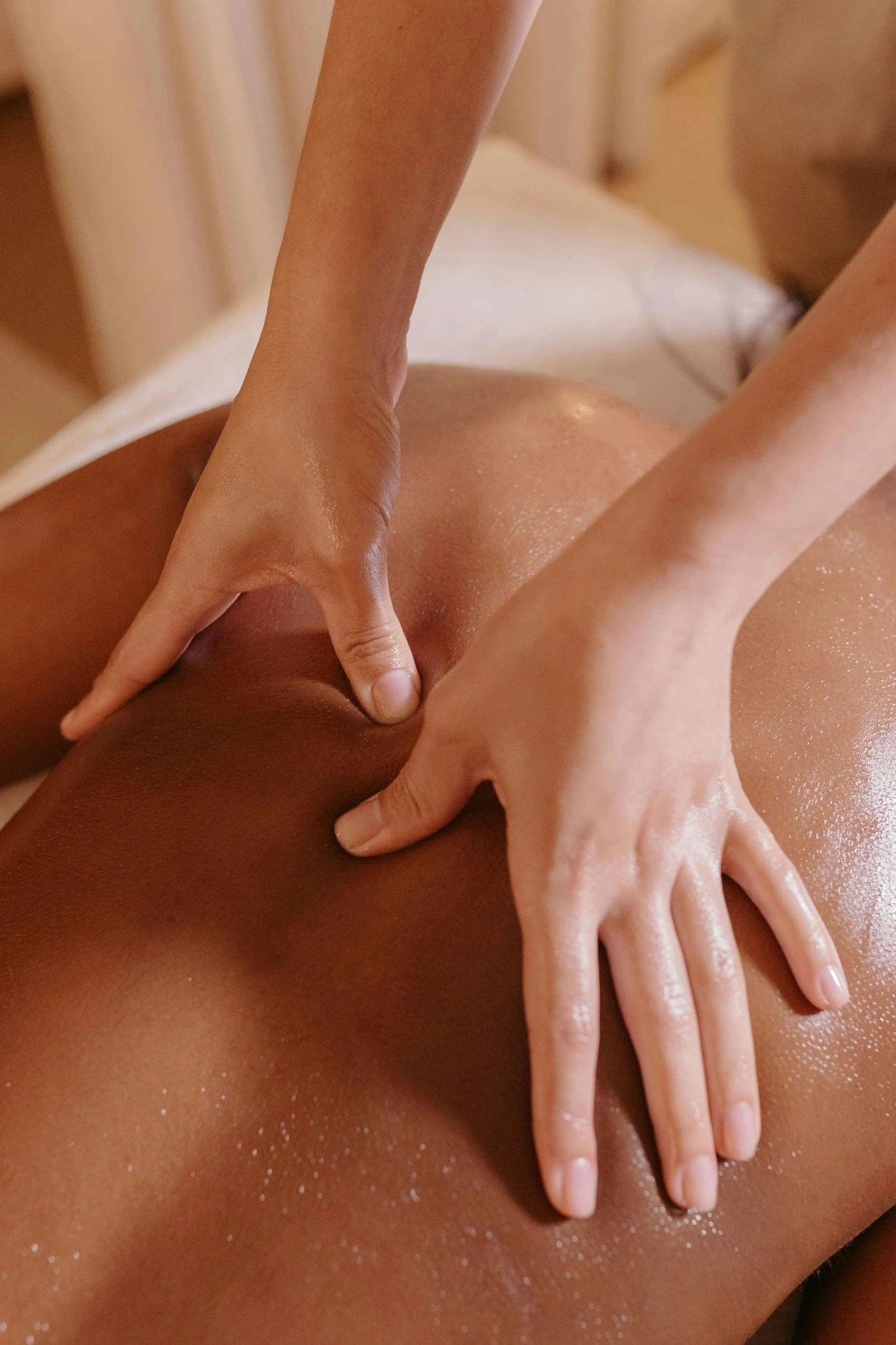
The Architecture of the Series
There is an elegant logic to the sequence:
Sessions 1 to 3 (the "sleeve") address the more superficial layers of fascia, opening up the outer wrapping of the body.
Sessions 4 to 7 (the "core") go deeper, releasing the structures closest to the spine and pelvis.
Sessions 8 to 10 (integration) weave the freed-up parts back together so the whole body moves as one coordinated unit.
Notice the through-line: the series starts with the breath, drops down to establish a foundation in the feet, works systematically up and through the core, and finishes by tying everything together from the feet to the head. Here is what each session is actually changing.
Session 1 — Freeing the Breath
The work begins at the ribcage, shoulders, neck, and spine to free up the breath, making it easier to breathe and to connect with the healing energy of unhindered breath. Starting here is intentional: breath is the most fundamental rhythm of the body, and releasing the ribcage sets the tone for everything that follows. Many people are surprised by how restricted their breathing has been once that first restriction lifts.
Session 2 — Building a Foundation
Attention drops to the feet and lower legs to provide a grounded foundation for the body. This session fully connects the foot to the earth and increases stability. If Session 1 opened the top of the structure, Session 2 establishes the base it stands on. Everything above the feet depends on how well the feet meet the ground, so this is where lasting structural change gets its footing.
Session 3 — Creating Length and Side-to-Side Space
Here the practitioner works the outer surfaces of the legs, torso, arms, and neck. This session lengthens the spine and side body, increasing the space and mobility between the ribs and the hip. For anyone who feels compressed through the waist, this is often where they first notice a sense of being taller and wider through the midsection, with more room to move on both sides.
Session 4 — Opening the Inner Line
The fourth session begins the deeper core work, addressing the inner leg from the arch of the foot up to the groin. It lengthens and eases the curves of the spine by releasing the fascial attachments of the pelvis, further grounds the foot to the earth, and increases energy flow through the inner leg. It is a powerful session for new mothers experiencing pelvic floor issues after delivery, a reminder that this work reaches structures ordinary massage rarely touches.
Session 5 — Balancing the Pelvis and Torso
Session 5 works through the various layers of abdominal muscles to balance the inner and outer structures of the pelvis and torso. It also improves breath capacity by freeing up the abdominal muscles, a callback to that very first session. The breath you started to free in Session 1 now gets a second, deeper release as the front of the core opens.
Session 6 — Freeing the Spine and Pelvis
Now the focus moves to the backs of the legs, the pelvis, the spine, and the head. This session increases the mobility and resilience of the spinal column, opens up the hamstrings, and frees the pelvis to move naturally while walking and standing, taking pressure off the lower back and spine. For people who carry stress and stiffness in the low back, this is frequently a turning point in the series.
Session 7 — Releasing the Head and Neck
The seventh session completes the core work by addressing the upper back, shoulders, and neck, plus the cranium and facial structures. It frees the movement of the cranium from the spine and loosens the attachments that pull the head forward and out of alignment. In a world of screens and forward-head posture, this session directly counters the downward, forward drift so many of us have settled into.
Session 8 — Beginning to Rewire
With the sleeve and core both addressed, the final three sessions shift into integration. Session 8 works the muscles around the hips and in the legs, giving problem areas focused attention. It begins the rewiring process, moving energy from the torso down through the legs and feet. The body now starts learning how to use all the new space and freedom it has gained.
Session 9 — Integrating the Upper Body
Session 9 mirrors the previous one, working the muscles of the shoulder girdle and arms. Problem areas again receive focused attention, and the session begins to integrate the work of previous sessions using movement of energy through the body. Lower body and upper body are knit back into a coordinated whole.
Session 10 — Pulling It All Together
The final session establishes horizontal planes of support and movement from the feet all the way up to the head. It pulls together all the work completed in the previous nine sessions and completes the integration of energy through the body. You leave not with ten isolated treatments behind you, but with one reorganized, integrated structure.

Why the Order Is the Whole Point
It is worth pausing on what makes this different from booking ten separate massages. In a typical massage, each visit stands alone; you treat what hurts today. In the 10-Series, no single session is the destination. Session 4 can release the pelvis precisely because Sessions 1 through 3 opened the breath, the feet, and the side body first. Session 10 can integrate the whole structure only because the previous nine prepared it.
This is the practical meaning of each session builds on the work completed in previous sessions. You are not collecting relief, you are constructing a new structural baseline, one layer at a time, from the surface to the core and back out to a coordinated whole.
How to Fit the Series Into Your Life
The 10-Series is flexible, and the cadence can be adjusted to fit your schedule:
Most people schedule one session every week or so.
Others complete the series in about five weeks, scheduling two sessions per week.
The one guideline that matters most: complete the 10-Series within six months to achieve the most benefit, so the work stays connected from session to session rather than fading between long gaps.

A Different Kind of Investment in Your Body
Structural Integration asks more of you than a single massage. It asks for a commitment to a process: ten sessions, in order, completed within a reasonable window. But what it offers in return is also different. Instead of temporary relief that fades by the weekend, it offers the chance to change the underlying structure, to breathe more freely, stand more easily, walk without the old pressure in your back, and inhabit a body that has learned new, healthier patterns of movement.
If you have been getting massages for years and keep returning to the same aches, the 10-Series may be the missing piece, not because massage has failed you, but because some patterns live deeper than a single session can reach. The map above shows exactly where the work goes and why. The next step is simply to begin at Session 1, with the breath, and let the body do the rest.
To learn more about the 10-Series and Structural Integration, visit Gifts of Healing or reach out to schedule your first session.